
Common Sports Injuries and Non-Surgical Treatment Options: How Physiotherapy Can Help
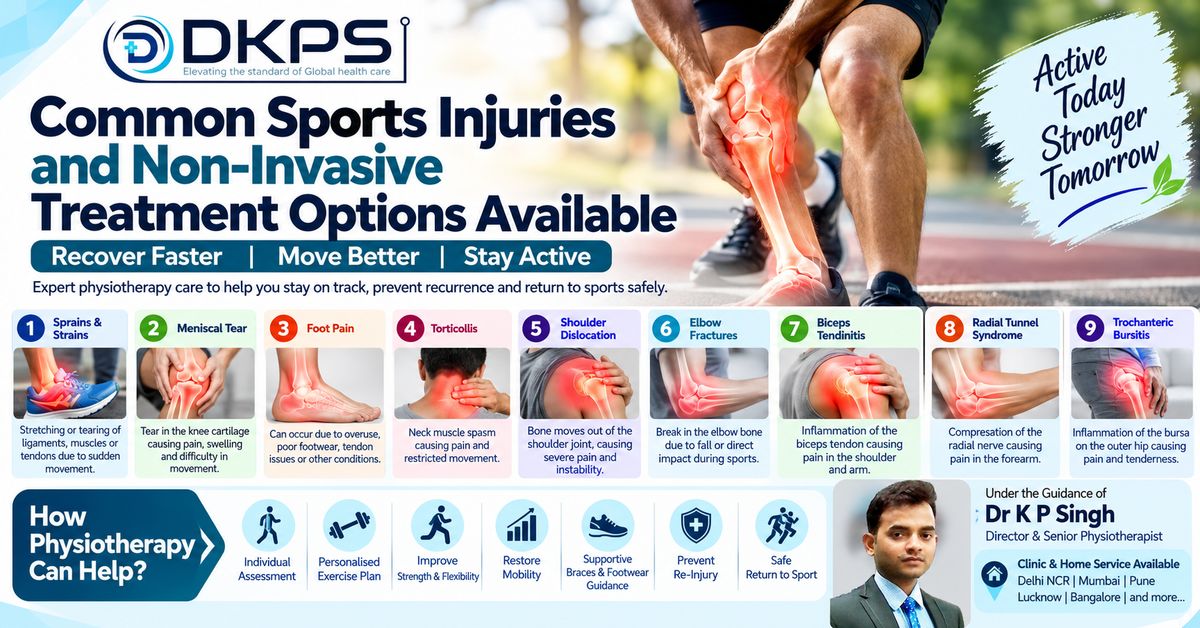
Sports and physical activities help us stay active, improve fitness and maintain a healthy lifestyle. However, playing cricket, badminton, football, running, gym workouts or even exercising at home can sometimes lead to injuries.
A sudden twist, fall, awkward landing or repeated movement can cause pain in the muscles, joints, ligaments or tendons. Some injuries improve with appropriate rest and rehabilitation, while others require medical assessment before exercise can safely begin.
The good news is that many sports injuries can be managed without surgery, depending on their type and severity. Physiotherapy can play an important role in restoring movement, improving strength and helping people return to their usual activities safely.
In this guide, Dr Singh Physiocare explains common sports injuries, their symptoms, non-surgical treatment options and how rehabilitation can support recovery.
What Are Sports Injuries?
Sports injuries are injuries that occur during sports, exercise, training or other physical activities. They may affect the muscles, bones, ligaments, tendons, joints or other tissues involved in movement.
Sports injuries generally fall into two broad categories:
Acute injuries: These happen suddenly, such as an ankle sprain after landing awkwardly or a shoulder dislocation following a fall.
Overuse injuries: These develop gradually when repeated activity places more stress on a body part than it can comfortably tolerate.
Recognising the symptoms early and getting the right assessment can help prevent an injury from becoming more difficult to manage.
9 Common Sports Injuries You Should Know About
1. Sprains and Strains
Sprains and strains are common injuries among people who play sports or exercise regularly.
A sprain affects a ligament, which connects one bone to another. A strain affects a muscle or tendon, which connects muscle to bone.
These injuries can happen when a person twists an ankle, changes direction suddenly, lifts a heavy weight or stretches a muscle beyond its usual capacity.
Common symptoms include:
Pain and tenderness
Swelling or bruising
Reduced movement
Muscle weakness
Difficulty putting weight on the affected area
How can treatment help?
Initial care may include protecting the injured area and temporarily reducing painful activities. Depending on the injury, a healthcare professional may recommend suitable support, movement exercises and progressive strengthening.
Physiotherapy can help restore mobility and strength as healing progresses.
Read more about sprains and strains: causes, symptoms and treatment.
2. Meniscal Tear
The meniscus is a type of cartilage inside the knee that helps distribute load and support joint movement. A tear may occur when the knee twists during sports or because of age-related changes in the tissue.
Football, basketball, badminton and other activities involving sudden turns can put stress on the knee.
Common symptoms include:
Pain around the knee
Swelling or stiffness
Difficulty bending or straightening the knee
Catching or locking sensations
Discomfort when twisting or changing direction
Non-surgical treatment options
Some meniscal tears can be managed without surgery. Depending on the injury, treatment may include activity modification, exercises to strengthen the muscles around the knee and balance training.
A locked knee or significant injury needs prompt medical assessment. Whether surgery is necessary depends on the type of tear and the patient's symptoms.
Learn more about meniscal tears and knee rehabilitation.
3. Foot Pain and Ankle-Related Injuries
Foot pain can develop after running, jumping, prolonged training or wearing footwear that does not suit the activity.
Some people experience heel pain, pain along the arch or discomfort around the foot after exercise. An ankle sprain can also affect walking and balance.
Common symptoms include:
Pain while walking or running
Swelling or tenderness
Discomfort around the heel or arch
Difficulty bearing weight
Reduced ankle movement
How can physiotherapy help?
Depending on the cause, rehabilitation may include ankle mobility exercises, strengthening, balance training and a gradual return to sport.
However, severe pain, inability to bear weight or suspected fractures require medical evaluation before starting exercises.
Read our guide to foot pain, its causes and treatment.
4. Torticollis and Neck Muscle Problems
Torticollis is a condition in which the head tilts or turns to one side because of muscle-related or other underlying problems. Neck discomfort may also occur after a sudden movement, an awkward sleeping position or certain sports injuries.
The cause is important because not all neck stiffness is simple muscle tightness.
Possible symptoms include:
Neck pain or stiffness
Difficulty turning the head
Muscle tightness
Restricted movement
Treatment options
After an appropriate assessment, treatment may include gentle mobility exercises, posture guidance and selected rehabilitation techniques.
Sudden severe neck pain following an accident, or neck pain accompanied by weakness, numbness or other neurological symptoms, needs prompt medical attention.
Learn more about torticollis and neck movement problems.
5. Shoulder Dislocation
A shoulder dislocation occurs when the upper arm bone moves out of its normal position in the shoulder joint. It may happen after a fall, collision or direct injury during sport.
This is a significant injury and should not be treated as ordinary shoulder stiffness.
Common symptoms include:
Sudden, severe shoulder pain
An unusual shoulder shape
Difficulty moving the arm
Swelling or bruising
Numbness or tingling in some cases
What treatment is needed?
A healthcare professional must assess the injury and manage the dislocation. Do not attempt to put the joint back into place yourself.
Once the shoulder has been treated and rehabilitation is appropriate, physiotherapy may help restore movement, strength and shoulder stability.
Read more about shoulder dislocation.
6. Elbow Fractures
An elbow fracture is a break in one or more bones forming the elbow joint. It may occur following a fall onto the hand or a direct impact during sport.
Common symptoms include:
Pain around the elbow
Swelling and bruising
Difficulty bending or straightening the arm
Tenderness after an injury
Reduced arm function
Can physiotherapy help?
The fracture must first be assessed and appropriately treated by a medical professional. Depending on the fracture, management may involve immobilisation or surgery.
When the treating clinician confirms that movement is safe, rehabilitation can help gradually restore elbow mobility, strength and function.
Learn more about elbow fractures.
7. Biceps Tendinitis
The biceps muscle helps move the elbow and shoulder. Biceps tendinitis involves irritation of the biceps tendon and can occur with repeated overhead activities, lifting or certain sports.
Common symptoms include:
Pain at the front of the shoulder
Discomfort while lifting the arm
Pain during repeated overhead movements
Tenderness around the affected tendon
Non-surgical treatment options
Treatment may involve modifying activities that aggravate the shoulder, improving movement and gradually strengthening the muscles around the shoulder.
A physiotherapist can help select exercises according to the person's symptoms and physical condition.
Read more about biceps tendinitis and treatment options.
8. Radial Tunnel Syndrome
Radial tunnel syndrome is associated with irritation or compression affecting the radial nerve in the forearm region. It may cause pain around the outer elbow or forearm, particularly during certain arm movements.
It can sometimes be confused with other elbow conditions, so an appropriate assessment is important.
Possible symptoms include:
Aching around the outer forearm
Pain during repeated arm movements
Discomfort when turning the forearm
Tenderness around the affected area
How can physiotherapy help?
Depending on the diagnosis, treatment may include activity modification, carefully selected exercises and guidance on reducing repetitive strain.
New or progressive weakness needs medical assessment because it may indicate a different or more significant nerve problem.
Learn more about radial tunnel syndrome.
9. Trochanteric Bursitis and Outer Hip Pain
The greater trochanter is the bony area on the outside of the hip. Pain in this region may be associated with irritation of nearby tissues, including the bursa and gluteal tendons.
The term trochanteric bursitis is commonly used, although many cases of outer hip pain involve the surrounding tendons as well.
Common symptoms include:
Pain on the outside of the hip
Discomfort while lying on the affected side
Pain when climbing stairs
Difficulty walking for long periods
Tenderness around the outer hip
How can physiotherapy help?
A rehabilitation programme may include strengthening the hip muscles, adjusting activities that aggravate symptoms and gradually improving walking tolerance.
Treatment should be based on the cause of the hip pain rather than assuming that every case is bursitis.
Learn more about trochanteric bursitis and hip pain.
What Is a Baker's Cyst?
A Baker's cyst is a fluid-filled swelling that develops at the back of the knee. It can occur when a knee problem causes extra joint fluid to collect in that area.
It may be associated with conditions such as arthritis or a meniscal tear.
Possible symptoms include:
Fullness or swelling behind the knee
Tightness when bending the knee
Discomfort during movement
Restricted knee flexibility
Treatment depends on the underlying knee problem. Physiotherapy may help improve movement and strength when appropriate, but the cyst and its cause should be assessed.
Sudden calf swelling or pain needs urgent medical evaluation because it can resemble a blood clot.
Read more about Baker's cyst.
Non-Surgical Treatment Options for Sports Injuries
Surgery is not required for every sports injury. Many mild or moderate injuries can be managed with suitable medical advice, activity modification and rehabilitation. However, the right treatment depends on the injury and its severity.
1. Physiotherapy and Exercise-Based Rehabilitation
Physiotherapy is an important part of recovery for many sports injuries. A personalised programme may include:
Mobility exercises to restore comfortable movement
Strengthening exercises for muscles supporting the affected joint
Balance and coordination training
Progressive loading to rebuild activity tolerance
Sport-specific exercises before returning to training
The exercises should progress gradually. Returning to full training too early may increase the risk of another injury.
2. Activity Modification and Relative Rest
Rest does not always mean avoiding all movement. For many injuries, it means temporarily reducing activities that aggravate symptoms while maintaining safe, comfortable movement where appropriate.
For example, a runner may need to reduce running temporarily while following a suitable rehabilitation programme.
Suspected fractures, dislocations and severe injuries require medical advice before exercising.
3. Heat or Cold Therapy
Cold packs may help manage discomfort and swelling after some recent injuries. Heat may help with certain types of muscle stiffness.
Always wrap packs in a towel and avoid extreme temperatures. These methods can help manage symptoms, but they do not repair every type of injury or replace medical assessment.
4. Manual Therapy
A physiotherapist may use selected hands-on techniques to support movement and symptom management when appropriate.
Manual therapy is generally best considered alongside exercise and activity guidance rather than as the only treatment.
5. Supportive Footwear, Braces or Taping
Some injuries may benefit from temporary support, appropriate footwear, braces or taping.
These should be selected according to the injury and the person's needs. A brace or support should not be used to continue painful sports activity without appropriate guidance.
6. Dry Needling or Other Additional Treatments
Some physiotherapy providers offer additional treatments such as dry needling. Its suitability depends on the condition, available evidence, potential risks and the patient's preferences.
Dry needling is not necessary for every injury and should only be performed by a suitably trained professional. It should not replace diagnosis, appropriate rehabilitation or urgent medical care.
How Can Physiotherapy Help You Return to Sport?
Recovering from a sports injury involves more than waiting for the pain to disappear. The affected area may also need to regain strength, mobility, balance and the ability to tolerate sports-specific movements.
A physiotherapist may guide recovery through these stages:
Stage 1: Assessment
The injury, symptoms, movement limitations and functional needs are evaluated.
Stage 2: Symptom Management
Activities may be adjusted, and appropriate movement is introduced according to the injury.
Stage 3: Strength and Mobility
Exercises help rebuild the strength, flexibility and control required for daily activities.
Stage 4: Functional Training
The patient gradually practises movements needed for their sport, such as changing direction, jumping or throwing, when safe.
Stage 5: Return to Sport
Returning to full training depends on recovery, function and medical guidance. Pain improvement alone does not always mean the injury is ready for full sports participation.
When Should You Seek Medical Attention?
Do not try to manage every sports injury at home. Seek urgent medical care if you experience:
A visible deformity or suspected dislocation
Severe pain after a fall or collision
Inability to bear weight on an injured leg
Suspected fracture
New or progressive weakness or numbness
A head injury with confusion, repeated vomiting or worsening headache
Sudden calf swelling or pain
After a suspected concussion, stop playing and seek appropriate medical assessment. Return to sport should follow professional guidance.
Why Choose Dr Singh Physiocare (DKPS Pvt Ltd)?
Choosing the right rehabilitation provider can help you understand your injury and plan your recovery more safely.
Dr Singh Physiocare provides physiotherapy and rehabilitation service information for people experiencing musculoskeletal pain and movement difficulties.
Patients should look for an approach that includes:
Assessment before treatment
A rehabilitation plan suited to the specific injury
Clear exercise instructions
Gradual progression according to recovery
Guidance on preventing repeated injury
Referral for medical evaluation when required
The goal is to help patients work towards improved movement and function without making unrealistic promises about recovery time or outcomes.
Frequently Asked Questions
1. Can sports injuries heal without surgery?
Yes, many mild or moderate sports injuries can be managed without surgery. However, some fractures, severe ligament injuries and dislocations may require surgical treatment. A medical assessment helps determine the appropriate approach.
2. How does physiotherapy help with sports injuries?
Physiotherapy may help restore movement, strength, balance and functional ability. It can also guide a gradual return to exercise and sport, depending on the injury.
3. Should I exercise when I have a sports injury?
It depends on the injury. Gentle movement may be suitable for some conditions, while suspected fractures, dislocations or severe injuries require medical assessment first. Avoid exercises that significantly worsen pain.
4. How long does recovery from a sports injury take?
Recovery time varies according to the type and severity of the injury, the person's overall health and the treatment required. Minor injuries may improve relatively quickly, while more serious injuries can take weeks or months.
5. How can I reduce the risk of sports injuries?
Warm up appropriately, increase training intensity gradually, use suitable footwear and equipment, allow recovery time and learn proper exercise techniques. Seek advice if pain persists or repeatedly returns.
Conclusion
Sports injuries can affect muscles, tendons, ligaments, bones and joints. Sprains, strains, meniscal tears, shoulder dislocations, tendon problems, elbow fractures and other conditions may require different approaches to treatment.
Non-surgical rehabilitation can be effective for many injuries, but it is not suitable for every case. The safest approach is to obtain an appropriate assessment, follow the recommended treatment plan and return to sport gradually.
Dr Singh Physiocare aims to provide useful physiotherapy information to help people understand their rehabilitation options and make informed decisions about their care.
Targeted Service Locations for this Therapy
Related Tags
AI Precision Recovery Roadmap
Our structured recovery pathway ensures accurate diagnostics and active care beyond clinic doors.
1. Assess
AI + Physio Precision
2. Plan
Smart-Goals Pathway
3. Track
Proof of Progress
4. Advance
Care Beyond Clinic
Watch Video Guide
Article Info
Author
Dr Kp Singh - MPT Orthopaedics joint muscles and spine specialist
Tags
Follow DKPS PhysioCare
Stay connected with us for health tips, rehabilitation guides & live updates.
Recommended Specialists
Consult with our licensed senior therapists for a personalized treatment roadmap.







Active Healing
Need Specialized Physiotherapy?
Book a home visit or clinic consultation with our senior specialist doctors for a personalized diagnosis.