
What is Total Knee Replacement (TKR) ?
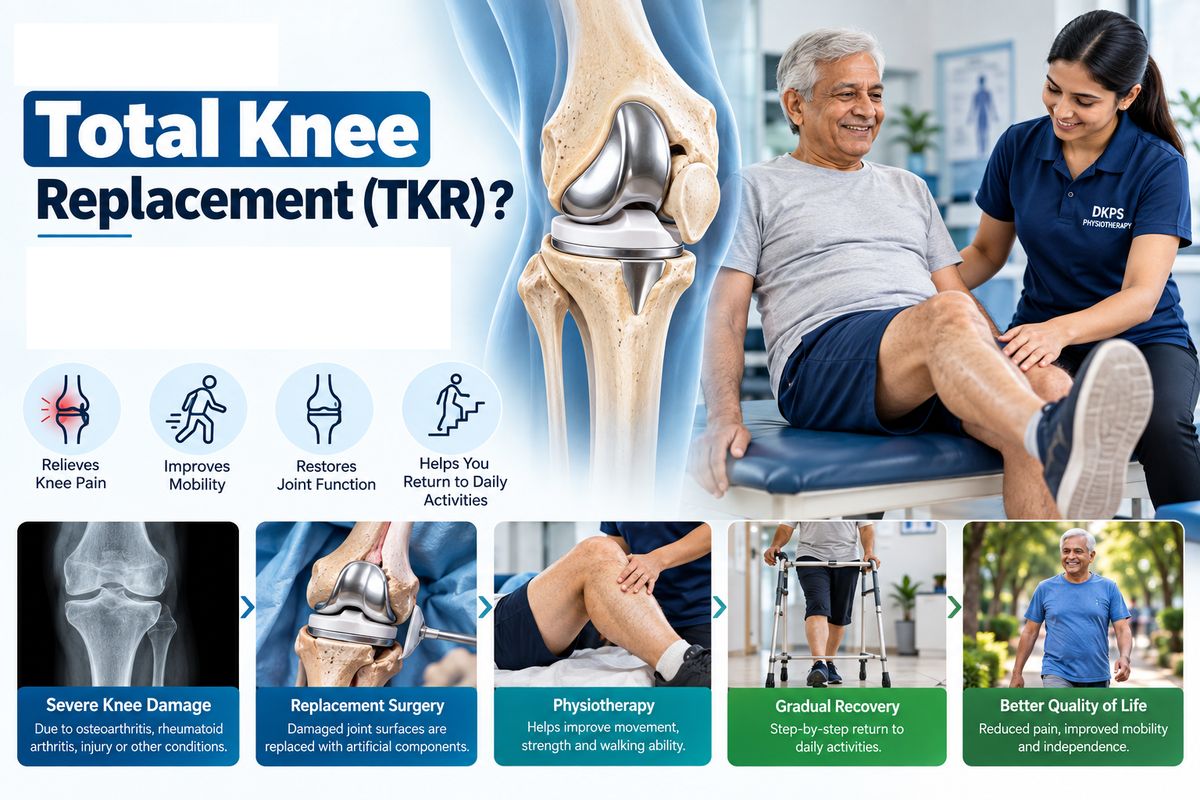
What Is Total Knee Replacement (TKR)?
Total Knee Replacement (TKR), also called Total Knee Arthroplasty (TKA), is a surgical procedure used to replace a severely damaged or worn knee joint with artificial components. It is generally considered when knee pain, stiffness, and reduced mobility significantly affect a person's daily activities and other treatment options have not provided enough relief.
The knee is a major weight-bearing joint that helps us walk, climb stairs, sit, stand, and perform everyday movements. Conditions such as advanced ostearthritis, rheumatoid arthritis, previous knee injuries, or other forms of joint damage can gradually affect the knee and make normal movement difficult.
After knee replacement surgery, physiotherapy and rehabilitation are important parts of recovery. A structured rehabilitation program can help improve knee movement, muscle strength, balance, walking ability, and confidence with daily activities.
What Happens During a Total Knee Replacement?
During TKR surgery, the damaged surfaces of the knee joint are removed and replaced with artificial components. These components are designed to allow the knee to move more smoothly.
A total knee replacement generally involves addressing the damaged surfaces of the:
- Femur (thigh bone)
- Tibia (shin bone)
- Patella (kneecap), depending on the surgical approach and condition
The exact surgical technique and type of implant depend on the patient's age, joint condition, activity level,
overall health, and the surgeon's assessment.
Why Is Total Knee Replacement Needed?
A knee replacement may be considered when damage to the knee joint becomes severe and causes persistent symptoms.
Common reasons for severe knee joint damage include:
1. Knee Osteoarthritis
Osteoarthritis can gradually wear down the protective cartilage inside the knee. As the condition progresses, patients may experience pain, stiffness, swelling, reduced movement, and difficulty walking.
2. Rheumatoid Arthritis
Rheumatoid arthritis is an inflammatory condition that can damage the tissues and structures within a
joint. In advanced cases, it may contribute to significant knee pain and loss of function.
3. Previous Knee Injury
Serious injuries, fractures, ligament problems, or other trauma can sometimes contribute to long-term changes within the knee joint.
4. Advanced Joint Degeneration
Progressive damage to the knee can affect mobility and make everyday activities increasingly difficult. Not every person with knee pain needs a knee replacement. The decision should be made after an appropriatemedical evaluation.
What Are the Symptoms of Severe Knee Joint Damage?
People with significant knee problems may experience one or more of the following:
- Persistent knee pain
- Knee stiffness
- Swelling around the joint
- Difficulty walking
- Difficulty climbing stairs
- Reduced knee movement
- Pain while standing for long periods
- Difficulty getting up from a chair
- Knee pain that interferes with daily activities
- Reduced ability to participate in normal physical activities
The symptoms and their severity can vary from person to person.
If knee pain is related to another condition such as a meniscal tear, the treatment approach may be different. You can learn more about this condition on our detailed page about Meniscal Tear.
How Is the Need for Knee Replacement Diagnosed?
Before considering knee replacement, a doctor usually evaluates the patient's symptoms, medical history, physical condition, and knee function.
Depending on the situation, assessment may include:
- Physical examination
- Evaluation of knee movement
- Assessment of pain and functional limitations
- X-rays
- MRI or other imaging when clinically appropriate
- Review of previous injuries or treatments
The purpose of the evaluation is to understand the condition of the knee and determine whether surgery or another treatment approach is appropriate.
Can Knee Pain Be Treated Without Knee Replacement?
In many cases, doctors may first consider non-surgical treatment depending on the cause and severity of the knee problem.
Treatment options can include:
- Physiotherapy
- Therapeutic exercises
- Activity modification
- Weight-management strategies where appropriate
- Pain-relieving medicines prescribed by a healthcare professional
- Assistive devices when required
- Injections in selected cases
For more information aboutconse rvative approaches and physiotherapy for knee problems, visit our Knee Pain Treatment page.
If the knee has advanced structural damage and non-surgical treatments no longer provide adequate relief, an
orthopedic specialist may discuss knee replacement surgery with the patient.
What Is Physiotherapy After Total Knee Replacement?
Physiotherapy is an important part of rehabilitation after TKR. The rehabilitation program is normally adjusted according to the patient's surgical procedure, medical condition, healing progress, strength, mobility, and functional goals.
A physiotherapist may work on:
Knee Movement
Exercises can help gradually improve knee flexibility and range of motion according to the rehabilitation plan.
Muscle Strength
The muscles around the knee and hip may become weak after surgery. Progressive strengthening exercises can help restore functional strength.
Walking and Gait Training
A physiotherapist can help the patient learn safe walking techniques and progress from walking aids when
appropriate.
Balance and Functional Movement
Rehabilitation may include exercises designed to improve balance and everyday movements such as standing, sitting, and using stairs.
Pain and Swelling Management
The rehabilitation plan may include appropriate strategies for managing postoperative discomfort and swelling. These should be followed according to the instructions of the treating medical team.
Early Recovery After Total Knee Replacement
The early postoperative period focuses on safe movement, pain management, wound care, and beginning
rehabilitation.
Patients may initially need assistance with walking and everyday activities. The physiotherapist can teach
appropriate exercises and movement techniques while following the surgeon's postoperative precautions.
Recovery is not identical for everyone. Factors such as age, general health, muscle strength, the condition
of the knee before surgery, surgical technique, and adherence to rehabilitation can influence the recovery process.
Home Physiotherapy After Knee Replacement
Some patients may find it difficult to travel to a clinic during the early stages of recovery. In such situations,
home physiotherapy may be considered when clinically appropriate.
A home-based physiotherapy program may focus on:
- Safe walking
- Knee mobility
- Progressive strengthening
- Bed and chair movements
- Stair practice
- Balance exercises
- Functional activities
- Education about safe movement
The exercises should be selected according to the patient's individual condition rather than following a generic online exercise program.
Total Knee Replacement Recovery: What to Expect
Recovery after TKR usually takes time and involves gradual progress rather than an instant return to normal activities.
During rehabilitation, the focus may gradually shift from basic mobility to improving strength, walking ability, balance, and functional independence.
Some people progress faster than others. Therefore, recovery should be monitored according to individual
clinical progress rather than comparing one person's recovery timeline with
another's.
If you are looking for physiotherapy support in Rohini, you can learn more about DKPS Physiotherapy Clinic in Rohini Sector 25.
What Should You Do After Knee Replacement Surgery?
Following the instructions provided by your orthopedic surgeon and physiotherapy team is important during recovery.
Patients should:
- Follow the prescribed rehabilitation program
- Perform exercises as instructed
- Use walking aids correctly when advised
- Attend follow-up appointments
- Avoid activities that have not yet been cleared by the treating team
- Take prescribed medicines as directed
- Report unusual or worsening symptoms to the appropriate healthcare professional
Do not increase exercise intensity simply because you feel better on a particular day. Rehabilitation should
progress gradually.
When Should You Contact a Healthcare Professional?
After knee replacement, patients should follow the postoperative instructions provided by their surgical team.
Seek prompt medical advice if you experience symptoms such as:
- Increasing or severe pain
- Significant swelling
- Fever or other signs of infection
- Problems with the surgical wound
- Sudden difficulty walking
- New or worsening leg swelling
- Chest pain or difficulty breathing
These symptoms can have different causes, so professional medical assessment is important.
FrequentlyAsked Questions About Total Knee Replacement
Is Total Knee Replacement the Same as TKA?
Yes. TKR stands for Total Knee Replacement, while TKA stands for Total Knee Arthroplasty. Both terms are commonly used to describe the procedure in which damaged knee joint surfaces are replaced with artificial components.
Is Every Knee Pain Patient a Candidate for TKR?
No. Knee pain can have many causes, including osteoarthritis, meniscal problems, ligament injuries, muscle
weakness, and other conditions. Treatment depends on the underlying cause and severity of the problem.
Is Physiotherapy Necessary After TKR?
Physiotherapy is an important component of rehabilitation for many patients after knee replacement. The
rehabilitation plan should be individualized and coordinated with the treating medical team.
How Long Does TKR Recovery Take?
Recovery varies from person to person. Progress depends on factors such as the patient's overall health,
pre-surgery mobility, muscle strength, surgical factors, and rehabilitation.
Can Physiotherapy Help With Knee Pain Before Surgery?
Physiotherapy may help some patients manage knee pain and improve strength and mobility, depending on the underlying condition. However, it cannot replace an orthopedic assessment when significant
structural damage is suspected.
Total Knee Replacement and Physiotherapy at DKPS
Total Knee Replacement is a major procedure, and rehabilitation is an important part of the recovery journey. A personalized physiotherapy program can focus on restoring mobility, strength, balance, walking ability, and confidence in everyday activities.
Dr. Singh Physio Care (DKPS) provides physiotherapy services with an emphasis onindividualized rehabilitation and functional recovery.
If you are experiencing persistent knee pain, difficulty walking, stiffness, or reduced knee movement, an appropriate clinical assessment can help determine the next step.
Explore our related resources:
- Meniscal Tear – Learn about symptoms, causes, and treatment considerations for meniscal injuries.
- Knee Pain Treatment – Explore physiotherapy-based approaches for managing knee pain.
- DKPS Physiotherapy Clinic in Rohini Sector 25 – Learn more about physiotherapy services available at the Rohini Sector 25 clinic.
Conclusion:
Total Knee Replacement is used to replace a severely damaged knee joint when pain and loss of function significantly affect daily life and other treatment options may no longer provide sufficient relief.
The surgery is only one part of the recovery process. Physiotherapy rehabilitation, gradual strengthening,
mobility training, and following medical guidance are important components of recovery.
Frequently Asked Questions
1. What is Total Knee Replacement (TKR)?
Total Knee Replacement (TKR), also called Total Knee Arthroplasty (TKA), is a surgical procedure in which damaged parts of the knee joint are replaced with artificial components. It may be considered when severe knee damage causes persistent pain, stiffness, and difficulty with daily activities.
2. How long does it take to recover from Total Knee Replacement?
Recovery varies from person to person. Many patients gradually improve their knee movement, strength, and walking ability through a structured rehabilitation program. The recovery timeline depends on factors such as overall health, pre-surgery mobility, surgical factors, and participation in physiotherapy.
3. Is physiotherapy necessary after Total Knee Replacement?
Physiotherapy is an important part of rehabilitationafter TKR. A physiotherapist can guide patients through exercises for knee mobility, muscle strengthening, balance, walking, and functional activities. The rehabilitation program should be adjusted according to individual recovery and medical advice.
4. Can knee pain be treated without Total Knee Replacement?
Yes, depending on the cause and severity of the knee problem. Treatment may include physiotherapy, therapeutic exercises, activity modification, medicines prescribed by a doctor, or other appropriate treatments. Knee replacement is generally considered when significant joint damage and symptoms persist despite appropriate non-surgical management.
5. Can I have physiotherapy at home after knee replacement?
Home physiotherapy may be an option for some patients, particularly during the early recovery period when travelling to a clinic is difficult. A physiotherapist can provide a personalized program focusing on safe mobility, knee exercises, strengthening, walking, and everyday activities according to the patient's condition.
Targeted Service Locations for this Therapy
Related Tags
AI Precision Recovery Roadmap
Our structured recovery pathway ensures accurate diagnostics and active care beyond clinic doors.
1. Assess
AI + Physio Precision
2. Plan
Smart-Goals Pathway
3. Track
Proof of Progress
4. Advance
Care Beyond Clinic
Watch Video Guide
Article Info
Author
Dr. Singh PhysioCare
Tags
Follow DKPS PhysioCare
Stay connected with us for health tips, rehabilitation guides & live updates.
Recommended Specialists
Consult with our licensed senior therapists for a personalized treatment roadmap.
















Active Healing
Need Specialized Physiotherapy?
Book a home visit or clinic consultation with our senior specialist doctors for a personalized diagnosis.