
7 Common Causes of Foot Pain After Walking and How Physiotherapy Can Help
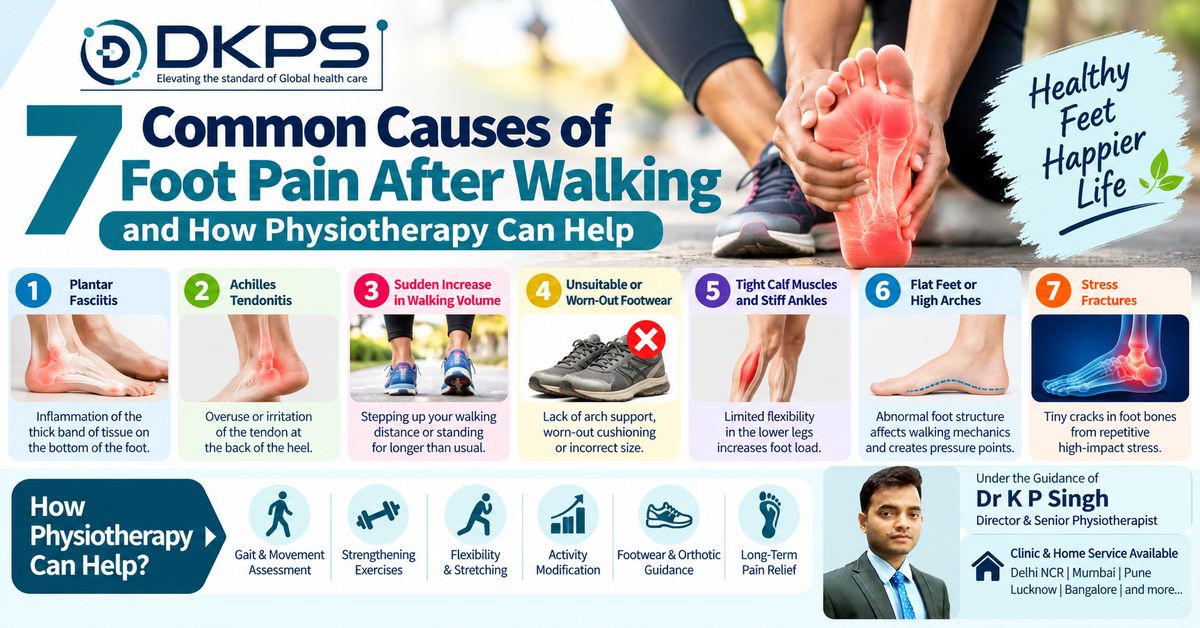
Foot pain after walking is a common problem that can affect people of different ages. You may notice pain in your heel, the bottom of your foot, your toes or the area around your ankle after a long walk. Sometimes the discomfort improves with rest, but recurring pain can make daily activities difficult.
In India, many people spend long hours standing at work, walking to public transport, doing household chores or travelling for daily responsibilities. Wearing unsuitable footwear or suddenly increasing walking time can also put extra pressure on the feet.
Understanding the reason for your foot pain is the first step towards finding the right treatment. In this article, we explain seven common causes of foot pain after walking, practical ways to manage discomfort and how physiotherapy may help improve movement and function.
What Is Foot Pain?
Foot pain refers to discomfort in any part of the foot, including the heel, arch, sole, toes or the area around the ankle. It may develop gradually due to repeated stress or suddenly following an injury.
Some people feel pain during their first steps in the morning, while others experience discomfort only after walking or standing for a long time.
The location and timing of the pain can provide useful clues, but they do not confirm the exact cause. Read our detailed guide on foot pain: causes, symptoms and treatment to understand this problem better.
1. Plantar Fasciitis
Plantar fasciitis is a common cause of pain around the heel and bottom of the foot. It involves irritation of the plantar fascia, a strong band of tissue that supports the arch of the foot.
Common symptoms
Sharp or aching pain near the heel
Pain during the first few steps in the morning
Discomfort after sitting or resting
Increased pain after prolonged standing or walking
How can physiotherapy help?
A physiotherapist may assess foot movement, calf flexibility and walking patterns. Treatment may include suitable plantar fascia and calf stretches, progressive strengthening and advice on managing walking loads.
Supportive footwear may also help reduce discomfort. The best treatment depends on your symptoms and assessment.
2. Achilles Tendinopathy
The Achilles tendon connects the calf muscles to the heel bone. Repeated loading, a sudden increase in exercise or inadequate recovery can contribute to irritation and pain in this tendon.
Common symptoms
Pain at the back of the heel
Tenderness around the Achilles tendon
Stiffness after resting
Discomfort during walking, running or climbing stairs
How can physiotherapy help?
Treatment may include a gradual strengthening programme for the calf muscles, activity modification and advice on returning to walking or exercise safely.
The amount of loading should be adjusted to the severity of the problem. Sudden or severe pain, especially after a popping sensation, needs prompt medical assessment.
3. Sudden Increase in Walking Distance
Have you recently started walking for fitness or increased your daily step count? Your feet may need time to adapt to the additional workload.
Suddenly walking much farther than usual, standing for extended periods or starting a new exercise routine can overload the muscles, tendons and bones of the feet.
Common symptoms
Aching feet after a long walk
Muscle fatigue
Soreness around the heel or arch
Discomfort that increases with activity
What can help?
Reduce the walking distance temporarily if it causes pain.
Increase walking time gradually as symptoms allow.
Take breaks during long periods of standing.
Allow enough recovery between demanding activities.
Seek assessment if the pain keeps returning.
Physiotherapy can help you develop a suitable activity plan and identify movement or strength issues that may contribute to recurring discomfort.
4. Unsuitable or Worn-Out Footwear
Shoes that are too tight, too loose or poorly suited to your activity may contribute to foot discomfort. Worn-out cushioning can also make long walks less comfortable for some people.
Common symptoms
Pain after wearing a particular pair of shoes
Pressure around the toes
Heel or arch discomfort
Blisters or rubbing
Foot fatigue after prolonged walking
What can help?
Choose comfortable shoes with enough room for your toes, a secure fit and suitable cushioning. Replace footwear when it becomes excessively worn.
Some people may benefit from supportive insoles, but these are not necessary for everyone. A physiotherapist or appropriate healthcare professional can help assess whether footwear changes or additional support may be useful.
5. Tight Calf Muscles and Stiff Ankles
The calf muscles and ankle joint help control movement during walking. If the calf muscles are tight or ankle movement is restricted, the way pressure passes through the foot may change.
This can contribute to discomfort in some people, particularly during repeated walking or climbing stairs.
Common symptoms
Tightness in the calves
Difficulty moving the ankle comfortably
Heel or arch discomfort
Stiffness after resting
Difficulty performing a comfortable calf raise
How can physiotherapy help?
A physiotherapist may assess ankle mobility, calf flexibility, muscle strength and walking mechanics.
Depending on the findings, the programme may include gentle stretching, ankle mobility exercises and progressive strengthening. Exercises should be selected according to the cause of the symptoms rather than performed forcefully.
6. Flat Feet or High Arches
The shape of your foot can influence how pressure is distributed during walking. Some people have low arches, commonly called flat feet, while others have higher arches.
Foot shape alone does not necessarily mean there is a problem. However, some people experience discomfort when their foot structure is combined with prolonged loading, unsuitable footwear or reduced muscle endurance.
Common symptoms
Foot fatigue after walking
Pain around the arch
Heel discomfort
Ankle discomfort
Difficulty tolerating long periods of standing
How can physiotherapy help?
A physiotherapist may examine your foot position, walking pattern, strength and mobility. Treatment may include strengthening exercises, balance training, footwear advice and gradual increases in walking activity.
Insoles or other supports may be considered when appropriate, based on individual needs.
7. Stress Fractures
A stress fracture is a small crack in a bone caused by repeated loading. It may develop when walking, running or other physical activity increases too quickly, especially when the bones have insufficient time to recover.
Unlike ordinary muscle soreness, a stress fracture can require a period of reduced or restricted weight-bearing.
Common symptoms
Localised pain in a specific area of the foot
Tenderness when the affected area is touched
Pain that increases during weight-bearing
Swelling in some cases
Pain that returns or worsens with continued activity
What should you do?
Do not try to stretch or strengthen through suspected stress-fracture pain. Stop the activity that causes pain and seek medical assessment promptly.
A healthcare professional may recommend imaging or other investigations if needed. Physiotherapy may become part of recovery once the injury has been appropriately assessed and the treating clinician confirms that rehabilitation is suitable.
How Can Physiotherapy Help With Foot Pain?
Physiotherapy aims to understand why movement is painful and identify suitable ways to improve strength, flexibility, mobility and daily function.
The treatment plan depends on the underlying cause. It may include the following approaches.
1. Walking and Movement Assessment
A physiotherapist may assess how you stand, walk and distribute weight through your feet. This can help identify movement patterns that may be contributing to discomfort.
2. Progressive Strengthening Exercises
Exercises may target the small muscles of the foot, calf muscles and other muscles involved in walking. Strengthening is introduced gradually according to the person's condition.
3. Flexibility and Mobility Training
Suitable calf stretches and ankle mobility exercises may help when tightness or restricted movement contributes to symptoms.
4. Activity Modification
If you have increased your walking distance too quickly, a physiotherapist can help plan a gradual return to activity. The goal is to avoid repeatedly overloading the affected tissues.
5. Footwear Guidance
Comfortable footwear and suitable support may improve walking comfort. Recommendations should be based on your foot structure, activity and symptoms.
6. Rehabilitation After Injury
After an injury has been diagnosed and medically managed, physiotherapy may help restore movement, strength and walking ability. The timing depends on the injury and its stage of healing.
How to Manage Foot Pain After Walking at Home
If the discomfort is mild and there are no warning signs, the following steps may help:
Reduce painful activity: Temporarily shorten walks or avoid activities that increase symptoms.
Choose comfortable footwear: Avoid shoes that squeeze your toes or rub against your heel.
Allow recovery: Take breaks and avoid suddenly increasing your daily walking distance.
Try gentle movement: Move your ankles comfortably without forcing painful stretches.
Monitor symptoms: Notice where the pain occurs and whether it is getting better or worse.
Seek professional advice: Arrange an assessment if pain persists, returns frequently or affects your walking.
Avoid using a fixed exercise routine to treat every type of foot pain. For example, suspected stress fractures require a different approach from uncomplicated muscle tightness.
When Should You See a Doctor?
Foot pain should not always be treated as ordinary tiredness. Seek prompt medical assessment if you experience:
Severe pain or significant swelling
Inability to bear weight or walk normally
Pain following a major injury
Localised bone tenderness or suspected stress fracture
Redness, warmth or a wound that is getting worse
A hot, swollen foot, particularly if you have diabetes
New numbness or changes in foot colour
People with diabetes, reduced sensation or circulation problems should take foot symptoms seriously and seek medical advice early.
Physiotherapy Services at Dr Singh Physiocare
Dr Singh Physiocare provides physiotherapy information and services for people experiencing musculoskeletal pain and movement difficulties.
Treatment for foot pain should begin with an appropriate assessment to understand the possible cause and determine whether physiotherapy is suitable.
Under the guidance of Dr KP Singh, patients can explore rehabilitation options according to their individual needs. You can learn more about his professional profile here:
Dr KP Singh – Physiotherapist Profile
Clinic and Home Physiotherapy
For people who find travelling difficult, home physiotherapy may be a convenient option where available. Dr Singh Physiocare reports services across selected locations, including Delhi NCR, Mumbai, Pune, Lucknow and Bengaluru.
Service availability, therapist allocation and travel charges may differ by location, so confirm the details before booking.
You can also visit the Dr Singh Physiocare website to explore available services.
Frequently Asked Questions
1. How do I stop my feet from hurting after walking?
If the pain is mild, reduce activities that worsen it, wear comfortable shoes and allow your feet to recover. Avoid suddenly increasing walking distance. If the pain persists or returns frequently, seek an assessment to identify the cause.
2. Which vitamin deficiency causes foot pain?
Vitamin B12 deficiency can cause nerve-related symptoms such as tingling, numbness or burning in the feet. Other nutritional problems may affect bone or muscle health. However, foot pain has many possible causes, and symptoms alone cannot confirm a vitamin deficiency. A healthcare professional can advise whether testing is needed.
3. Can physiotherapy help with foot pain?
Yes, physiotherapy may help with some causes of foot pain by improving strength, flexibility, mobility and walking mechanics. The treatment depends on the underlying condition. A suspected fracture or serious injury must be assessed before beginning exercises.
4. Why do I get sore feet after walking?
Sore feet after walking may result from increased activity, unsuitable footwear, tight calf muscles, plantar fasciitis or other foot conditions. If the pain is localised, severe or getting worse, medical assessment is recommended.
5. Why does the bottom of my foot hurt when I walk?
Pain under the foot can be associated with plantar fasciitis, pressure from footwear, overuse or other conditions. Heel pain that is worse during the first steps after resting may occur with plantar fasciitis, but an assessment is needed to determine the actual cause.
Conclusion
Foot pain after walking can develop for several reasons, including plantar fasciitis, Achilles tendon problems, sudden increases in walking, unsuitable footwear, tight calf muscles, foot-arch differences and stress fractures.
The right treatment depends on identifying the cause. Comfortable footwear, gradual activity changes and suitable physiotherapy may help some people improve movement and manage symptoms. However, persistent pain or signs of a serious injury should not be ignored.
If foot pain is affecting your daily routine, consider a professional assessment to understand the problem and determine whether physiotherapy can help.
Targeted Service Locations for this Therapy
AI Precision Recovery Roadmap
Our structured recovery pathway ensures accurate diagnostics and active care beyond clinic doors.
1. Assess
AI + Physio Precision
2. Plan
Smart-Goals Pathway
3. Track
Proof of Progress
4. Advance
Care Beyond Clinic
Article Info
Author
Dr. Singh PhysioCare
Follow DKPS PhysioCare
Stay connected with us for health tips, rehabilitation guides & live updates.
Recommended Specialists
Consult with our licensed senior therapists for a personalized treatment roadmap.



















Active Healing
Need Specialized Physiotherapy?
Book a home visit or clinic consultation with our senior specialist doctors for a personalized diagnosis.