
6 Common Back Pain Exercises at Home Under the Guidance of a Physiotherapist
Back pain can make everyday activities such as sitting, walking, bending and sleeping uncomfortable. Long hours at a desk, poor posture, muscle strain, limited physical activity and improper lifting techniques may contribute to lower back discomfort.
The good news is that suitable exercises can help improve flexibility, mobility and muscle strength in many people with back pain. However, the right exercise depends on the cause of the pain and your physical condition.
Under the guidance of Dr KP Singh, Director of Dr Singh Physiocare (DKPS Pvt Ltd), patients can learn about appropriate movement and rehabilitation options. Dr Singh Physiocare provides physiotherapy services for people experiencing back pain and other musculoskeletal problems.
In this guide, we explain six common back pain exercises you may be able to practise at home, including how to perform them, their potential benefits and important precautions.
What Is Back Pain?
Back pain refers to discomfort in the upper, middle or lower part of the back. Lower back pain is particularly common because this area supports the upper body and is involved in many everyday movements.
Some people experience mild stiffness after sitting for a long time, while others may have pain that affects walking, bending or household activities.
Back pain can result from muscle strain, injuries, disc-related problems or other medical conditions. Identifying the possible cause helps determine which exercises and treatments are appropriate.
Read more about the causes, symptoms and treatment of back pain.
Can Back Pain Exercises Help?
For many people, an appropriate exercise programme can help improve movement, strengthen supporting muscles and support recovery. Gentle exercises may also help people return to everyday activities gradually.
However, not every exercise is suitable for every type of back pain. If a movement increases your pain, stop rather than forcing your body to complete it.
People with severe pain, recent injuries, recent surgery or symptoms travelling down the leg should seek professional advice before starting a new exercise routine.
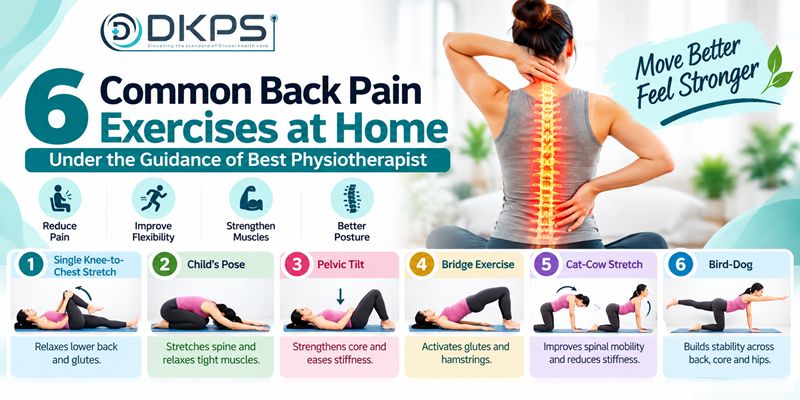
1. Single Knee-to-Chest Stretch
The single knee-to-chest stretch is a gentle movement that may help stretch the muscles around the lower back and hips.
How to do it
Lie on your back on a comfortable, firm surface.
Bend both knees and keep your feet flat on the floor.
Gently bring one knee towards your chest.
Hold the knee with your hands without pulling forcefully.
Keep the other leg in a comfortable position.
Slowly release and repeat on the opposite side.
Hold and repetitions: Hold for 10–30 seconds if comfortable. Repeat 2–3 times per side.
Why it may help: The stretch may reduce the feeling of tightness around the lower back and buttock muscles in some people.
Important tip: Do not force your knee towards your chest. Stop if the movement causes sharp pain, tingling or worsening symptoms.
2. Child's Pose
Child's Pose is a gentle stretching position that may help relax the back and hip muscles. It is not suitable for everyone, particularly people who experience discomfort when bending forward.
How to do it
Begin on your hands and knees on a mat.
Slowly move your hips backwards towards your heels.
Reach your arms forward along the floor.
Lower your chest and forehead towards the mat only as far as comfortable.
Breathe slowly and relax your shoulders.
Return to the starting position gradually.
Hold and repetitions: Hold for 20–30 seconds initially, if comfortable. You may gradually increase the hold to 30–60 seconds if tolerated.
Why it may help: This position can gently stretch the back and hip muscles and encourage relaxation.
Important tip: If bending forward increases your back pain or pain travelling down your leg, avoid this stretch until you have received appropriate guidance.
3. Pelvic Tilt
Pelvic tilts are commonly used in rehabilitation programmes to improve awareness of pelvic movement and gently activate the abdominal muscles.
How to do it
Lie on your back with your knees bent and feet flat on the floor.
Keep your arms relaxed beside your body.
Gently tighten your abdominal muscles.
Slowly tilt your pelvis backwards so that your lower back moves towards the floor.
Hold briefly without holding your breath.
Relax and return to a comfortable starting position.
Hold and repetitions: Hold for 3–5 seconds and repeat around 10 times, if comfortable.
Why it may help: Pelvic tilts encourage controlled movement of the lower back and gentle activation of the core muscles.
Important tip: Keep the movement small and controlled. Avoid pushing your back forcefully into the floor.
4. Bridge Exercise
The bridge exercise works the gluteal muscles and other muscles involved in hip movement. These muscles contribute to everyday activities such as standing, walking and climbing stairs.
How to do it
Lie on your back with your knees bent.
Keep your feet flat on the floor, approximately hip-width apart.
Place your arms beside your body.
Gently tighten your abdominal and gluteal muscles.
Slowly lift your hips to a comfortable height.
Avoid arching your lower back excessively.
Hold briefly, then lower your hips slowly.
Hold and repetitions: Hold for 3–5 seconds and repeat around 10 times, if tolerated.
Why it may help: Bridges strengthen the gluteal muscles and support hip and trunk function.
Important tip: Start with a small hip lift. If the movement increases your back pain, stop and ask a physiotherapist whether an alternative exercise would be more appropriate.
5. Cat-Cow Stretch
Cat-Cow is a gentle mobility exercise that moves the spine through comfortable bending and extension positions.
How to do it
Start on your hands and knees.
Position your hands beneath your shoulders and your knees beneath your hips.
Slowly round your back upwards, gently lowering your head.
Return towards a neutral back position.
Gently lower your abdomen and lift your chest without forcing your neck or lower back.
Continue moving slowly between the two positions.
Duration: Practise for 30–60 seconds, or approximately 6–10 slow repetitions, if comfortable.
Why it may help: The movement encourages spinal mobility and may help reduce stiffness in some people.
Important tip: Keep the movement gentle. Do not push into an extreme arch or rounded position.
6. Bird-Dog Exercise
Bird-Dog is a controlled exercise that challenges balance and strengthens muscles involved in supporting the trunk and hips.
How to do it
Begin on your hands and knees.
Keep your back in a comfortable, neutral position.
Slowly extend your right arm forwards.
At the same time, extend your left leg backwards.
Keep your hips level and avoid twisting your body.
Return to the starting position and switch sides.
Hold and repetitions: Hold for 3–5 seconds on each side. Start with 5 repetitions per side and gradually increase towards 10 if comfortable.
Why it may help: Bird-Dog develops trunk control, coordination and hip stability.
Important tip: If balancing is difficult, begin by lifting only one arm or one leg at a time.
Safety Tips Before Starting Back Pain Exercises
Before practising these movements at home, keep the following points in mind:
Start slowly and use a comfortable surface.
Breathe normally throughout each exercise.
Avoid sudden movements and forceful stretching.
Do not continue an exercise that causes sharp or worsening pain.
Increase repetitions gradually rather than doing too much on the first day.
Follow your healthcare professional's advice if you have a diagnosed spinal condition or are recovering from surgery.
Exercise should support your recovery, not make your symptoms worse.
When Should You Consult a Physiotherapist?
Consider a physiotherapy assessment if back pain is affecting your daily activities, keeps returning, limits your movement or does not improve as expected.
A physiotherapist can assess your movement, muscle strength, flexibility and functional limitations. Based on the findings, they can suggest suitable exercises and explain how to perform them safely.
Professional guidance is particularly useful when you are unsure which movements are appropriate for your condition.
For more information, visit Dr Singh Physiocare.
Seek urgent medical attention if back pain occurs with new loss of bladder or bowel control, numbness around the groin, progressive leg weakness or other serious symptoms. These signs should not be managed with home exercises alone.
Other Treatment Options for Back Pain
Exercises are only one part of managing back pain. Depending on the cause, treatment may also involve activity modification, medical assessment, physiotherapy and other appropriate approaches.
Cupping Therapy
Cupping involves placing cups on the skin to create suction. Some people consider it for musculoskeletal discomfort, but evidence for back pain relief remains limited and it may cause side effects such as bruising or skin irritation.
It should not replace an appropriate assessment or an evidence-based rehabilitation plan.
If you want to understand the listed treatment options and pricing, visit Cupping Therapy Price in Delhi.
Needle Therapy for Back Pain
Needle-based treatments can refer to different techniques, and their suitability depends on the specific method and the patient's condition. They should be performed only by an appropriately trained professional using suitable hygiene and safety procedures.
Discuss the potential benefits, risks and alternatives with your healthcare professional before choosing this treatment.
Learn more about Needle Therapy for Back Pain.
Why Choose Dr Singh Physiocare (DKPS Pvt Ltd)?
When choosing a physiotherapy provider, look for an appropriate assessment, a treatment plan suited to your condition and clear instructions for exercises you can perform safely.
Dr Singh Physiocare (DKPS Pvt Ltd) offers physiotherapy services for people with back pain and other movement-related problems.
Patients can explore suitable rehabilitation options based on their symptoms, mobility and treatment requirements.
To learn more about Dr KP Singh's professional background, visit the Dr KP Singh profile.
The goal of physiotherapy is to help patients work towards better movement, strength and everyday function through an appropriate rehabilitation plan.
Frequently Asked Questions
1. What is the best exercise for lower back pain?
There is no single best exercise for everyone. Knee-to-chest stretches, pelvic tilts, Cat-Cow and selected strengthening exercises may be suitable for some people, depending on the cause of their pain and their physical condition.
2. Can I do back pain exercises at home every day?
Some gentle exercises may be performed regularly if they are appropriate for your condition and do not worsen symptoms. Begin gradually and follow professional advice if you have an injury or an underlying spinal problem.
3. How many repetitions should I do?
For the exercises in this guide, you can start with approximately 5–10 repetitions where specified, or shorter holds for stretches. Your comfortable range and the cause of your back pain should determine the amount of exercise you perform.
4. When should I stop exercising for back pain?
Stop if an exercise causes sharp or increasing pain, new tingling, numbness or weakness. Seek medical attention for severe symptoms or warning signs such as loss of bladder or bowel control.
5. Can physiotherapy help with recurring back pain?
Physiotherapy may help improve movement, strength and functional ability in many cases of back pain. A physiotherapist can assess your condition and recommend an individualised programme.
Conclusion
Back pain can affect your comfort, mobility and daily routine, but the right approach can help you work towards improved movement and function.
Single knee-to-chest stretches, Child's Pose, pelvic tilts, bridges, Cat-Cow and Bird-Dog are six common exercises that may be useful for selected people. Start gently, avoid movements that worsen your symptoms and remember that not every exercise is suitable for every condition.
For personalised advice, consider a physiotherapy assessment rather than relying only on online exercises. Dr Singh Physiocare (DKPS Pvt Ltd) provides information about physiotherapy and other treatment options to help patients make informed decisions about their care.
AI Precision Recovery Roadmap
Our structured recovery pathway ensures accurate diagnostics and active care beyond clinic doors.
1. Assess
AI + Physio Precision
2. Plan
Smart-Goals Pathway
3. Track
Proof of Progress
4. Advance
Care Beyond Clinic
Watch Video Guide
Article Info
Author
Dr Kp Singh - MPT Orthopaedics joint muscles and spine specialist
Follow DKPS PhysioCare
Stay connected with us for health tips, rehabilitation guides & live updates.
Recommended Specialists
Consult with our licensed senior therapists for a personalized treatment roadmap.








Active Healing
Need Specialized Physiotherapy?
Book a home visit or clinic consultation with our senior specialist doctors for a personalized diagnosis.