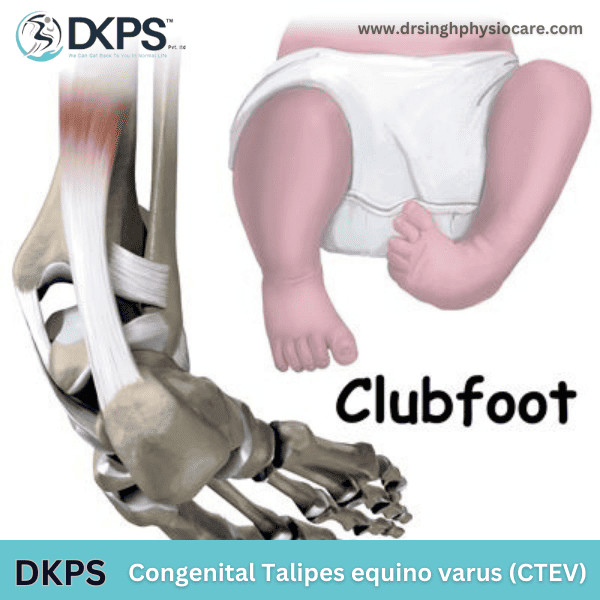
Symptoms:
• The most prominent symptom is the abnormal position of the foot, characterized by:
o Inward turning (adduction)
o Downward pointing (equinus)
o Inward twisting (varus)
o High arch (cavus)
• Affected feet might appear smaller than the unaffected ones.
• In severe cases, the skin might be stretched and appear shiny.exclamation
Treatment Options:
• Effective therapy depends on early intervention.
• The Ponseti method, a non-surgical approach involving gentle manipulation and casting, is the most common treatment for CTEV.
• Bracing is often used alongside casting to maintain the corrected position.
• Surgery might be considered in severe cases or when non-surgical methods are not successful.
By offering these comprehensive treatment options, DKPS Pvt Ltd aims to provide personalized care and support to individuals with CTEV, ensuring optimal outcomes and improved quality of life.
Additional Information:
• CTEV affects approximately 1 in every 1,000 newborns.
• Males are slightly more likely to be affected than females.exclamation
• Early and successful treatment can lead to normal foot development and function.
It’s important to remember that this information is intended for general knowledge and should not be a substitute for professional medical advice. If you have concerns about your child’s foot development, consult a healthcare professional for proper diagnosis and treatment.
Conclusion:
In conclusion, congenital talipes equinovarus (CTEV), commonly known as clubfoot, is a birth defect characterized by an abnormal position and structure of the foot. While the exact cause remains unknown, it is believed to involve genetic and environmental factors. Early diagnosis and intervention are crucial for effective treatment and ensuring normal development.
Treatment options for CTEV include the Ponseti method, a non-surgical approach involving gentle manipulation and casting, often supplemented with bracing. In severe cases or when non-surgical methods are unsuccessful, surgery may be necessary.
CTEV affects approximately 1 in every 1,000 newborns, with males being slightly more affected than females. Successful treatment can lead to normal foot development and function. It’s important for parents to seek professional medical advice if they have concerns about their child’s foot development.
For more information about physiotherapy services provided at home all over India, please contact DKPS Pvt Ltd at 8700670059.
FAQs
1. What are the 4 deformities of CTEV?
The four deformities of CTEV (congenital talipes equinovarus) are:
• Cavus: Occurs in the midfoot
• Adductus: Occurs in the midfoot
• Varus: Occurs in the hindfoot
• Equinus: Occurs in the hindfoot
2. What is the cause of congenital Talipes Equinovarus?
Congenital talipes equinovarus (CTEV), also known as clubfoot, is a developmental disorder of the lower limb. It’s caused by a shortened Achilles tendon, which causes the foot to turn in and under. Doctors don’t know what causes it, and there’s no way to ensure that your baby won’t be born with it. However, some causes include:
3. What is the CTEV risk factor?
This manifestation, which has never been reported before, is consistent with a hereditary cause for congenital idiopathic talipes equinovarus deformity. Work position (employed), consanguineous marriage, sex (male), and gestational age (> 42 weeks) were significant risk factors for idiopathic CTEV.
4. Does clubfoot pregnancy carry a high risk?
One’s pregnancy will not be impacted by isolated clubfoot. To assess your child’s health throughout the pregnancy, you might require more frequent monitoring if your child also has another birth defect in addition to clubfeet.